COURSE DETAILS
The PHP Programming course offered at NIMACT is having the latest curriculum related to server side programming and modern PHP development practices, with the view to preparing web programmers for catering to the IT, E-commerce, Education and Software Industry in India. The curriculum and the study materials are revised and updated every six months for the inclusion of the latest PHP versions, security practices, coding standards and AI assisted learning methods. Accordingly assistance and advice are sought on a continuing basis from the industry for knowing and assessing their requirements.
PHP occupies a unique position in the programming world. It was not designed to be an academic language or a showpiece of computer science. It was designed to solve one practical problem - how to make a web page respond to a real user. Because of that focus, PHP became the fastest way to turn an idea into a working web feature, and it still is. A student writes a few lines, saves the file, refreshes the browser, and immediately sees the result. This short gap between writing and seeing is what makes PHP such a good language to learn programming on.
The economics matter too, especially in India. PHP hosting is the cheapest available, every shared hosting plan supports it without any extra configuration, and a small client can afford to run a PHP website for years. WordPress alone, which is written in PHP, powers a very large portion of the world's websites, which means PHP knowledge automatically opens the entire WordPress, theme and plugin market as well. For a student who wants both a job and local clients, few languages offer this much reach at this low a cost.
This course also corrects a common problem. Many people learn PHP only as scattered code mixed inside HTML, and they never learn it as a proper language. Such a person can copy a form but cannot build a system. So here PHP is taught as a complete programming language first - data types, arrays, functions, scope, file handling, error handling and object oriented programming - along with the modern way PHP is actually written today, using Composer, namespaces and clean structure. After this base, the student is ready for database work and full web development without confusion.
NIMACT teaches every programming language on the model of AI > Programming Language (Coding). The first stage is AI. Tools like ChatGPT, Claude AI, Gemini and Copilot are used to explain a concept such as session, superglobal, namespace or exception in simple language, to explain the meaning of a PHP warning or fatal error, to read a script line by line and describe what it does, and to give extra practice questions. The second stage is the coding itself. Every script, every function and every class is typed, run and understood by the student with his own hands. This rule is followed with extra care in PHP, because the most sensitive code a PHP developer writes is form handling and login logic, and a copied login script is exactly the door through which a website gets hacked.
So many opportunities after this course. IT companies, web agencies, e-commerce firms, startups, schools and local businesses need PHP programmers, and the job profile will be PHP Developer, Web Developer, Backend Developer Trainee, WordPress Developer, Web Support Executive, Script Maintenance Executive etc. Freelance work is equally strong, because small businesses constantly need forms, small tools, website fixes and custom features written in PHP.
Who Should Attend: Students of BCA, MCA, B.Tech, Polytechnic and Diploma who have PHP or web programming in their syllabus. Beginners who want an easy and practical first programming language. Web designers who know HTML and CSS and now want their pages to actually work. Students planning to take up PHP MySQL Web Development, WordPress or Laravel later, as well.
ELIGIBILITY CRITERIA: Open to all. There is no minimum qualification for this course. Basic computer and internet handling is helpful, but the course starts from the very first step.
Mode: Hybrid (Offline + Online + Live Doubt Session)
SYLLABUS:
To get a better idea about the course structure, let us go through a list of important subjects present in this program. Note - Only the important points have been mentioned.
- Web and Programming Concept, ICT & AI
- Artificial Intelligence (AI) as a Learning Support - ChatGPT, Claude AI, Gemini, Copilot, Grok, DeepSeek, Perplexity
- AI for Concept Explanation, Error Meaning, Code Reading and Practice Questions
- Introduction to PHP
- History, Versions and Features of PHP
- Server Side vs Client Side Scripting
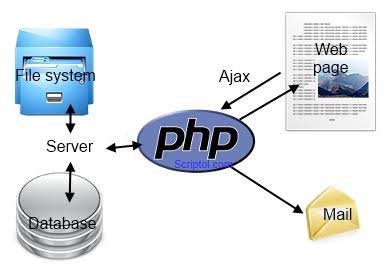
- How a PHP Page Works - Request, Processing, Response
- PHP vs Python, Node.js and Java for Web
- Where PHP is Used - Websites, WordPress, APIs, Admin Panels
- Development Environment Setup
- XAMPP or WAMP Installation and Configuration
- Apache Server, htdocs Folder and localhost
- php.ini File and Basic Configuration
- VS Code Setup and Useful Extensions
- Error Reporting Settings for Development
- PHP Basics
- PHP Tags, Statement and Semicolon Rule
- Comment - Single Line and Multi Line
- echo, print, print_r and var_dump
- Variable, Naming Rules and Case Sensitivity
- Constant with define and const
- Data Types - String, Integer, Float, Boolean, Array, Object, NULL
- Type Casting, Type Juggling and Strict Types
- Variable Scope - Local, Global, Static
- Variable Variables and Heredoc, Nowdoc
- Operators
- Arithmetic, Assignment, Comparison and Logical Operators
- Increment, Decrement and String Operators
- Ternary Operator and Null Coalescing Operator
- Spaceship Operator and Operator Precedence
- Control Structures
- if, else, elseif and Nested if
- switch Statement
- match Expression
- Alternative Syntax for Templates
- Loops
- for Loop, while Loop and do while Loop
- foreach Loop for Arrays
- break, continue and Nested Loop
- Loop with Array and Pattern Programs
- Arrays
- Indexed Array, Associative Array and Multidimensional Array
- Array Creation, Access and Modification
- Array Functions - count, array_push, array_pop, array_shift, array_unshift
- array_merge, array_slice, array_splice, in_array, array_search
- array_keys, array_values, array_flip, array_unique
- array_map, array_filter, array_reduce
- Sorting - sort, rsort, asort, ksort, usort
- Array Iteration and Nested Array Handling
- String Handling
- String Functions - strlen, strtolower, strtoupper, ucfirst, ucwords
- substr, strpos, str_replace, trim, explode, implode
- sprintf, number_format and String Formatting
- Regular Expression - preg_match, preg_replace, preg_split
- Date, Time and Math
- date, time, mktime, strtotime and Date Formatting
- Time Zone Setting and Date Calculation
- Math Functions - round, ceil, floor, abs, rand, pow, sqrt
- Project
- Functions
- Function Declaration, Call and Return Value
- Parameter, Default Parameter and Named Argument
- Pass by Value and Pass by Reference
- Variable Number of Arguments
- Recursive Function
- Anonymous Function and Closure
- Arrow Function
- Callback Function and Higher Order Function
- Type Declaration for Parameter and Return
- File Inclusion and Code Organization
- include, require, include_once, require_once
- Common Header, Footer and Config File
- Project Folder Structure and Clean Code Practice
- Form and Data Handling
- HTML Form Basics and Form Methods
- GET vs POST and When to Use Each
- Superglobals - $_GET, $_POST, $_REQUEST, $_SERVER, $_FILES, $_ENV
- Receiving and Displaying Form Data
- Server Side Validation and Required Field Check
- Sanitization and filter_var Functions
- Sticky Form and Error Message Display
- Redirect with header Function
- URL Parameter and Query String Handling
- Session and Cookie
- Session Concept, session_start and $_SESSION
- Session Variable, Session Destroy and Timeout
- Cookie Create, Read, Update and Delete
- Login Logic and Access Control with Session
- Session Security Practices
- File Handling
- File Open, Read, Write, Append and Close
- file_get_contents and file_put_contents
- File Existence, Size, Rename, Copy and Delete
- Directory Handling and File Listing
- File Upload with Validation and Size Limit
- Image Upload, Rename and Safe Storage
- CSV File Read and Write
- Error and Exception Handling
- Error Types - Notice, Warning, Fatal Error, Parse Error
- Error Reporting and Custom Error Handler
- try, catch, finally and throw
- Exception Class and Custom Exception
- Logging Errors to a File
- Debugging Techniques and Common PHP Mistakes
- Object Oriented PHP
- OOP Concept and Why It Is Needed
- Class, Object and Property
- Constructor, Destructor and Method
- Access Modifier - public, private, protected
- Inheritance and parent Keyword
- Method Overriding
- Static Property, Static Method and Class Constant
- Abstract Class and Abstract Method
- Interface and Multiple Interface
- Trait and Code Reuse
- Magic Methods - __construct, __get, __set, __toString, __call
- Type Hinting and instanceof
- Namespace and Autoloading
- Namespace Concept and Use Statement
- PSR Standards and Coding Convention
- Composer Installation and composer.json
- Package Installation and Autoload
- Working with External Libraries
- Data Exchange and API Basics
- JSON Encode and Decode
- Working with Arrays and JSON Together
- XML Handling Basics
- cURL and External API Calling
- Creating a Simple REST API in PHP
- HTTP Status Code and Response Handling
- Security Fundamentals
- Input Validation and Output Escaping
- XSS and CSRF Concept
- Password Hashing with password_hash and password_verify
- Secure File Upload Practice
- Hiding Configuration and Sensitive Data
- Safe Coding Habits for PHP Developers
- Practical Programs
- Calculator and Unit Converter
- Student Marksheet and Grade Program
- Contact Form with Validation and Email
- Registration and Login System with File Storage
- File Based Record Keeping System
- Image Gallery with Upload
- Simple REST API with JSON Output
- Multi Platform and Career
- PHP on Windows, Linux and Online Compilers
- Git and GitHub Basics for PHP Projects
- Introduction to Laravel and CodeIgniter
- WordPress and PHP Relationship
- Path Ahead - PHP MySQL Web Development and Full Stack Development
- Emerging Technologies - Modern PHP, API First Development and AI Assisted Coding
- Project Work
- Internship